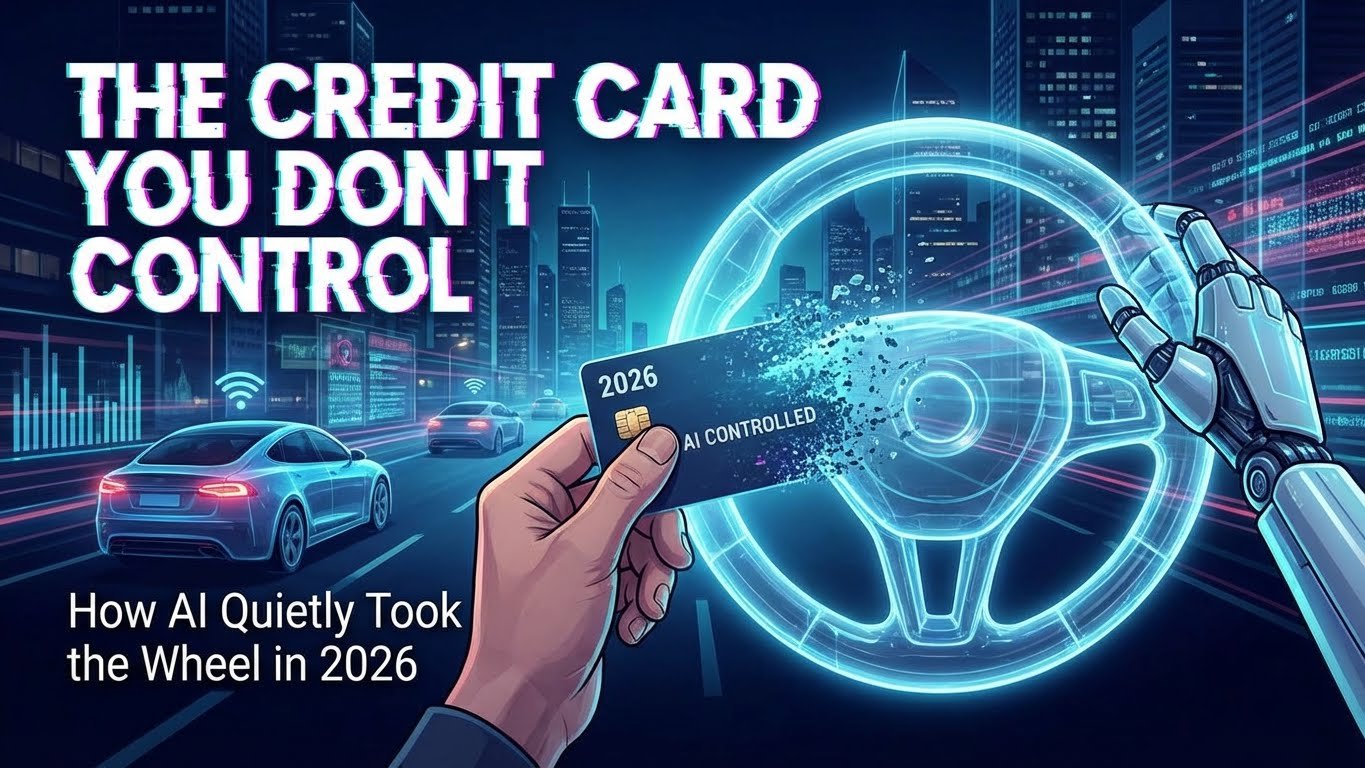
In 2026, most people still say,
“I paid with my credit card.”
But that statement is no longer fully true.
You didn’t choose the card.
You didn’t decide how much credit to use.
You didn’t select the repayment method.
Your AI wallet did.
Credit cards still exist—but control has shifted. This article explains how AI quietly took the wheel of credit cards, why most users didn’t notice, what this means for personal finance, and how to stay empowered in a world where credit decisions happen faster than thought.
Credit Cards Used to Be Simple
Credit cards once had clear rules:
Fixed limit
Fixed billing cycle
Fixed interest rate
One clear statement
You spent.
You waited.
You paid.
That simplicity made responsibility obvious.
What Changed by 2026?
Credit cards didn’t disappear.
They evolved into credit engines inside AI wallets.
Today, a “credit card” is:
A funding source
A risk layer
A reward engine
A dynamic credit line
The plastic is irrelevant.
The intelligence is everything.
The Moment Control Quietly Shifted
The shift didn’t feel dramatic.
It happened gradually:
Auto-pay became default
Wallets started choosing cards
Limits became flexible
Payments stopped failing
Convenience replaced decision-making.
And most people welcomed it.
How AI Decides When You Use Credit
When you tap to pay, AI evaluates:
Cash balance
Upcoming bills
Credit utilization
Interest exposure
Reward optimization
Risk profile
Then it decides:
“Use credit now.”
Or:
“Use debit instead.”
Or:
“Split this payment.”
All before you blink.
Why You Rarely Notice the Decision
Because nothing feels different.
The payment works.
The receipt appears.
Life continues.
That invisibility is intentional.
Good systems feel effortless—even when they’re complex.
Smart Credit Is Not Traditional Debt
Old credit felt heavy.
New credit feels soft.
Because:
Repayments are flexible
Minimums adjust
Balances roll smoothly
AI prevents extreme risk
Debt still exists—but emotional warning signs are muted.
Why Credit Card Limits Feel Higher Than Ever
Limits didn’t magically increase.
They became dynamic.
AI raises or lowers usable credit based on:
Spending behavior
Repayment patterns
Income stability
Economic conditions
Your “limit” now changes silently.
The Disappearance of the Decline
Declines used to teach discipline.
In 2026, declines are rare.
Instead, AI:
Routes payments differently
Extends short-term credit
Adjusts settlement timing
The system protects convenience—but removes a learning signal.
Rewards Are No Longer a Choice
You don’t “pick” rewards anymore.
AI automatically:
Applies the best cashback
Converts points instantly
Selects optimal card networks
Rewards became passive.
That’s good—but also distracting.
When Optimization Replaces Awareness
Optimization focuses on numbers.
Awareness focuses on behavior.
AI optimizes:
Cost
Speed
Risk
But it doesn’t ask:
“Is this spending necessary?”
That question still belongs to you.
Why People Trust AI with Credit Decisions
People trust AI because:
It reduces mistakes
It avoids late fees
It feels smarter than humans
And in many ways—it is.
But intelligence doesn’t equal values.
The New Risk: Passive Financial Behavior
The biggest risk in 2026 isn’t fraud.
It’s passivity.
When systems decide everything:
Users disengage
Habits go unchecked
Small problems grow silently
Credit works best when it’s guided—not ignored.
Who Benefits the Most from AI-Controlled Credit?
Disciplined spenders
Busy professionals
Families managing multiple expenses
Users with stable income
AI amplifies good financial habits.
Who Needs to Be Careful?
Impulse spenders
Users with emotional shopping habits
Anyone carrying revolving balances
AI amplifies bad habits faster.
How to Take Back Control Without Fighting AI
You don’t need to micro-manage.
You need to set rules.
Do this:
Enable spending alerts
Set category caps
Review weekly summaries
Understand credit usage trends
You steer.
AI drives.
Transparency Is the Missing Piece
The future of credit isn’t less AI.
It’s explainable AI.
Users want to know:
Why credit was used
Why limits changed
Why a payment was split
Trust grows when systems explain themselves.
Why Going Back to Manual Credit Won’t Work
Some users try to disable automation.
That usually leads to:
Missed payments
Lower rewards
More stress
The solution isn’t control—it’s understanding.
Credit Cards Are Becoming Financial Assistants
Your credit card no longer just lends money.
It:
Predicts cash flow
Manages risk
Protects from fraud
Optimizes outcomes
That power must be paired with awareness.
The Real Question of 2026
It’s not:
“Is AI controlling my credit?”
It’s:
“Do I understand how it’s doing it?”
Those who understand win.
Those who ignore drift.
Final Thoughts: Control Has Changed—Not Disappeared
You didn’t lose control of your credit card.
Control simply moved:
From transactions
To rules
To oversight
In 2026, financial strength isn’t about choosing every swipe.
It’s about designing the system that chooses for you.
Frequently Asked Questions (FAQs)
1. Do I still control my credit card in 2026?
Yes, but control is indirect through rules and settings.
2. Is AI deciding my payments?
Yes, most modern wallets use AI to optimize payment decisions.
3. Is this safer than traditional credit cards?
Generally yes, due to better fraud detection and risk control.
4. Can AI increase my debt?
Only if spending habits are poor and alerts are ignored.
5. Should I disable AI features?
No. Learn and monitor them instead.
6. Are rewards better now?
Yes, but only valuable if spending is controlled.
7. Is this the future of credit cards?
Yes. Smart, dynamic, and AI-driven credit is the new standard.
Disclaimer
This article is for informational purposes only and does not constitute financial advice. Always review official terms and consult financial professionals when needed.
