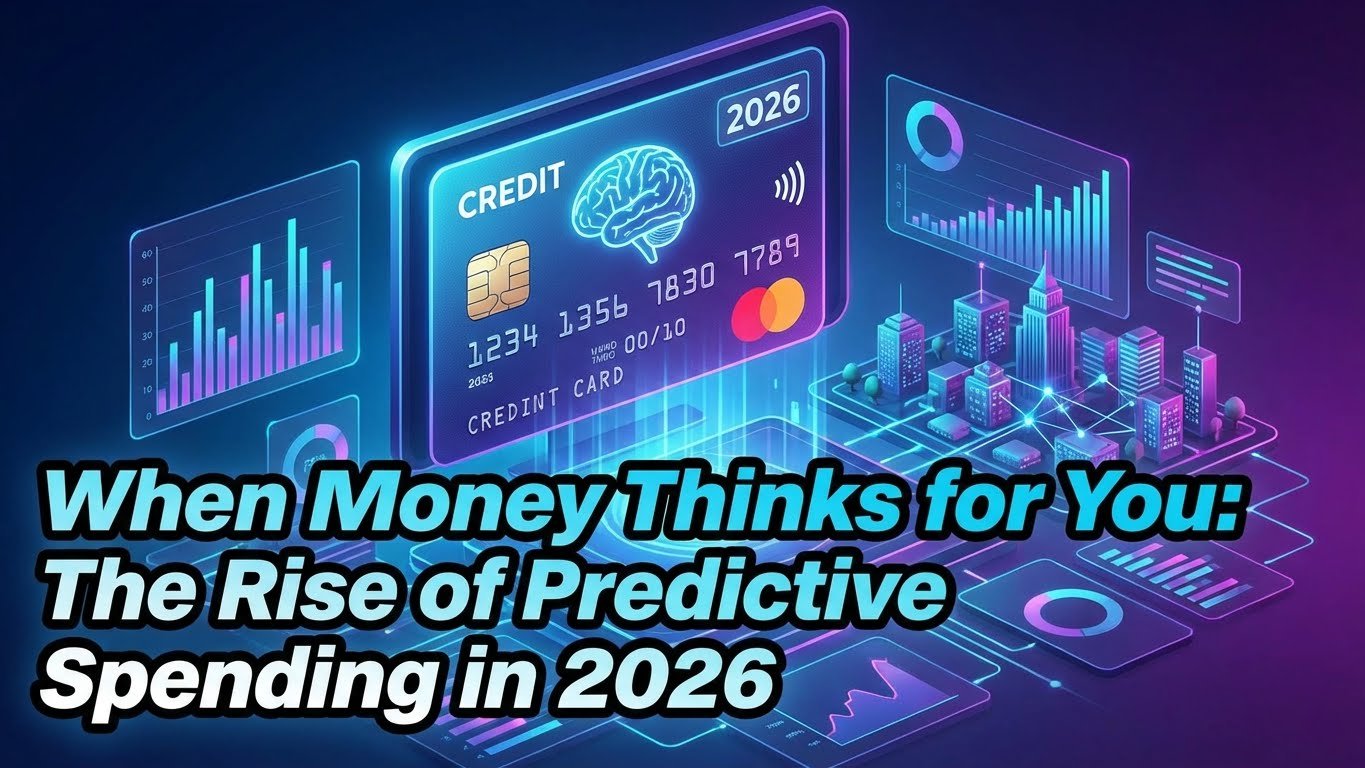
In 2026, money doesn’t just move fast.
It thinks ahead.
Before you buy something, your wallet already knows:
If you can afford it
How it will affect your budget
Which payment method is best
Whether it fits your past behavior
You don’t see this thinking.
You only see the result.
Welcome to the age of predictive spending.
What Is Predictive Spending?
Predictive spending is when AI systems anticipate your financial behavior and prepare decisions before you act.
Instead of reacting to purchases, modern wallets:
Predict future expenses
Forecast cash flow
Adjust credit usage in advance
Warn you before trouble appears
Money is no longer reactive.
It’s proactive.
How We Used to Spend Money
Not long ago, spending worked like this:
You bought something
You checked your balance later
You adjusted (or didn’t)
Mistakes happened after the damage.
In 2026, the system tries to prevent damage before it happens.
The AI Brain Behind Predictive Finance
Every smart wallet today runs on predictive models.
These models analyze:
Past spending patterns
Income cycles
Bill schedules
Seasonal habits
Risk signals
From this data, AI predicts:
“What’s likely to happen next?”
That prediction shapes every decision.
Why Prediction Changed Everything
Prediction changed finance because humans are bad at forecasting.
People underestimate:
Small daily expenses
Subscription creep
Irregular bills
Long-term interest
AI doesn’t forget patterns.
It remembers everything.
How Predictive Spending Works in Real Life
You don’t see predictions directly.
You see outcomes like:
“Safe to spend” indicators
Spending nudges
Adjusted credit availability
Early alerts
Your wallet quietly adapts before problems appear.
Credit Cards That Prepare for Tomorrow
Credit cards in 2026 don’t wait for statements.
They predict:
End-of-month balances
Repayment risk
Interest exposure
If risk rises, the system:
Reduces usable credit
Suggests alternative payments
Warns you early
This protects users—without sudden shocks.
Why Limits Change Without Notice
People often ask:
“Why did my credit limit change?”
The answer is prediction.
Limits now respond to:
Predicted income stability
Expected expenses
Broader economic signals
It’s not punishment.
It’s prevention.
Predictive Spending vs Budgeting
Traditional budgets are static.
Predictive spending is dynamic.
Budgets say:
“You planned this much.”
Prediction says:
“Based on current behavior, this is what will happen.”
Prediction adapts faster than plans.
The Psychological Shift: Less Surprise, More Calm
One big benefit of predictive finance is emotional.
People experience:
Fewer surprises
Less panic
Better preparation
Knowing what’s coming reduces anxiety—even if numbers don’t change.
When AI Warns You Before You Overspend
Modern wallets may warn:
“This purchase may affect next week’s bills”
“You’re trending higher than usual”
“This category is approaching a risk zone”
These are not blocks.
They are mirrors.
Why Some People Ignore Predictions
Not everyone listens.
People ignore warnings because:
They feel confident
They trust future income
They assume “it will work out”
Prediction only helps those who pay attention.
Predictive Spending and Subscriptions
Subscriptions are perfect for prediction.
AI can:
Forecast renewal impact
Detect unused services
Predict long-term cost
This makes subscription management far easier—if users act.
How Predictive Systems Reduce Debt Traps
Debt traps form slowly.
Prediction catches them early.
AI flags:
Rising revolving balances
Minimum-payment reliance
Interest-heavy trends
Early awareness prevents long-term damage.
Is Predictive Spending Controlling You?
This is a common fear.
The truth:
Prediction advises.
It doesn’t force.
You can still spend.
But you spend informed.
Where Predictive Spending Can Go Wrong
No system is perfect.
Prediction can fail when:
Income changes suddenly
Life events disrupt patterns
Users override warnings repeatedly
AI adapts—but human behavior still matters.
Privacy and Predictive Finance
Prediction requires data.
That’s why regulations now demand:
Transparency
User consent
Limited data usage
Clear explanations
Prediction without trust doesn’t work.
The New Financial Skill: Responding Early
In 2026, the most valuable skill is early response.
Instead of fixing problems later, smart users:
Adjust early
Pause spending
Review forecasts
Small corrections beat large recoveries.
Why Prediction Makes Finance Feel Smarter
People don’t feel smarter because of math.
They feel smarter because:
Fewer mistakes happen
Problems appear earlier
Decisions feel supported
AI reduces regret—not effort.
Prediction Is Not Permission
A dangerous misunderstanding exists.
Some users think:
“If AI didn’t warn me, it’s fine.”
That’s wrong.
Prediction is guidance—not approval.
How to Use Predictive Spending the Right Way
A simple approach:
Trust predictions—but verify weekly
Act on early warnings
Review trends, not just balances
Keep spending goals visible
This balance keeps AI helpful—not dominant.
The Future: Money That Plans With You
The next step is collaboration.
Future wallets will ask:
“Do you want to adjust next month’s plan?”
“This habit is changing—should we adapt?”
“Would you like to slow spending this week?”
Finance becomes a conversation—not a report.
Final Thoughts: Prediction Is Power—If You Use It
Predictive spending is one of the biggest financial shifts of the decade.
It:
Reduces surprises
Prevents mistakes
Improves confidence
But only for users who engage.
In 2026, money doesn’t just follow you.
It watches patterns, anticipates outcomes, and offers guidance.
The smartest move is not to ignore it—
But to listen before problems arrive.
Frequently Asked Questions (FAQs)
1. What is predictive spending?
It’s AI-driven forecasting that anticipates financial outcomes before they happen.
2. Do AI wallets really predict my spending?
Yes, based on past behavior and current trends.
3. Is predictive spending accurate?
Often, but not perfect. Life changes can affect predictions.
4. Can predictive systems stop overspending?
They can warn you, but you still decide.
5. Is this safer than traditional budgeting?
Yes, because it adapts in real time.
6. Does prediction mean less privacy?
Only if providers misuse data. Regulations now limit this.
7. Is predictive finance the future?
Yes. Finance is moving from reaction to anticipation.
Disclaimer
This article is for educational purposes only and does not constitute financial advice. Always consider your personal financial situation and consult professionals when needed.
