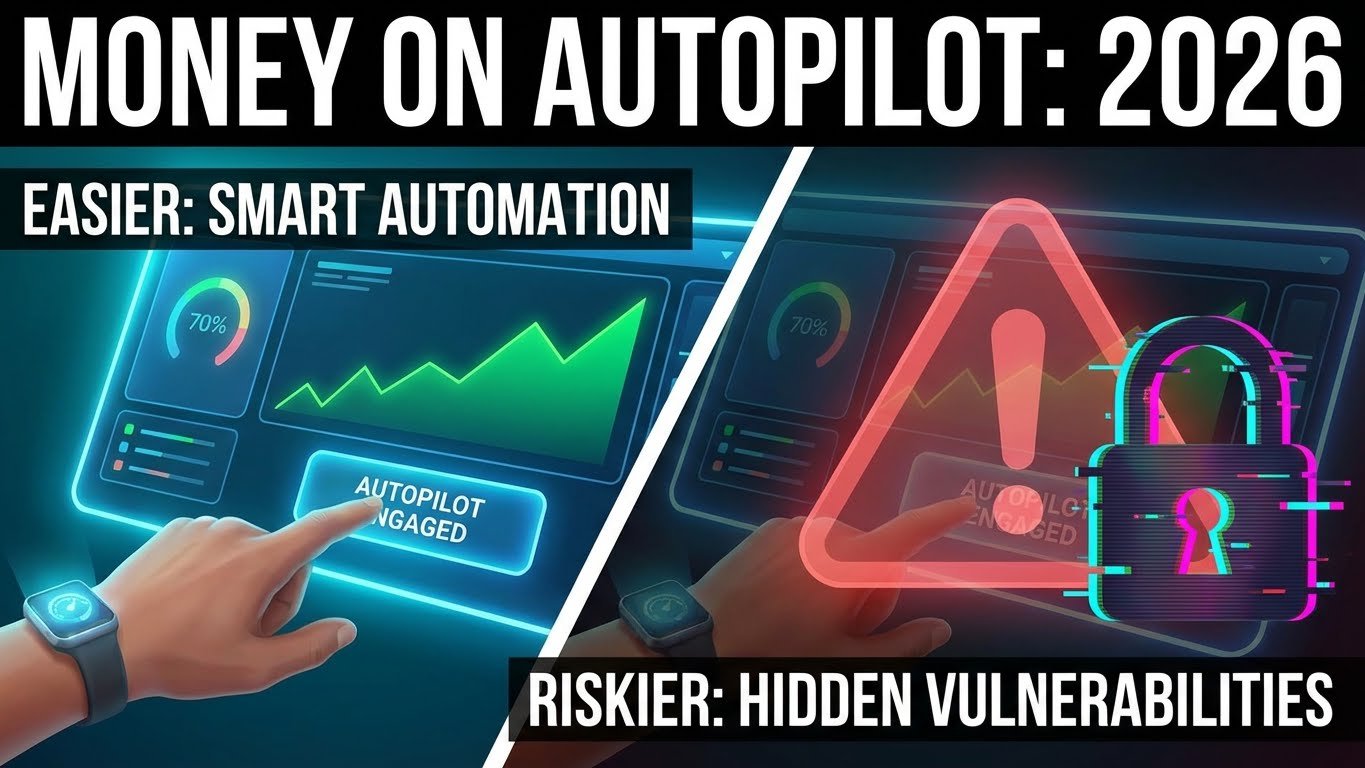
Money has never been easier to manage.
That sounds like a good thing.
Bills pay themselves.
Cards approve instantly.
Wallets pick the best option automatically.
Yet many people in 2026 feel something unexpected:
They feel less connected to their money than ever before.
This is the paradox of modern finance. As systems get smarter, financial life feels simpler—but also more distant. In this article, we’ll explore why money is now on autopilot, how AI wallets and smart credit changed personal finance, and how to stay financially strong without fighting technology.
The Shift from Management to Automation
In the past, managing money required effort.
You had to:
Track expenses
Remember due dates
Compare cards
Plan repayments
That effort created awareness.
In 2026, effort is optional.
Money systems now assume you want:
Convenience
Speed
Optimization
So they automate everything.
What Does “Money on Autopilot” Mean?
Money on autopilot means:
Payments happen without approval
Credit adjusts dynamically
Rewards apply automatically
Subscriptions renew silently
Wallets decide how to pay
Your role shifts from manager to observer.
Why Automation Took Over So Fast
Automation didn’t win because it was flashy.
It won because:
People hate friction
Mistakes are costly
Time is limited
AI reduced:
Missed payments
Late fees
Fraud risk
Decision fatigue
The trade-off? Less emotional awareness.
The AI Brain Inside Your Wallet
Every modern wallet runs a decision engine.
That engine evaluates:
Cash flow
Credit health
Risk score
Merchant type
Reward efficiency
It chooses the path that makes the most mathematical sense.
What it doesn’t measure well is how you feel about spending.
When Convenience Becomes Invisible Risk
Convenience removes warning signs.
In older systems:
Declines felt embarrassing
Low balance caused stress
Payment delays created pause
Now, AI smooths everything.
You rarely feel limits—even when they exist.
Why Debt Feels Softer Than Before
Smart credit has changed debt psychology.
Because:
Payments are flexible
Minimums adjust
Limits change dynamically
Debt feels less threatening.
But debt hasn’t changed.
Interest still compounds.
Balances still grow.
Habits still matter.
Autopilot Spending vs Intentional Spending
Autopilot spending happens when:
You don’t review
You don’t question
You don’t set rules
Intentional spending happens when:
AI handles execution
You handle direction
The future isn’t manual finance.
It’s guided automation.
Why Financial Anxiety Didn’t Disappear
Despite smarter tools, anxiety remains.
Why?
Because:
People don’t trust what they don’t see
Automation hides consequences
Money feels abstract
Clarity reduces anxiety more than control.
The Role of Financial Dashboards in 2026
Dashboards are the new budget.
Good dashboards show:
Spending trends
Category drift
Subscription growth
Credit utilization over time
They don’t judge.
They reveal.
Subscriptions: Autopilot’s Weak Spot
Subscriptions thrive on autopilot systems.
Because:
Renewals are silent
Small amounts go unnoticed
Multiple services overlap
AI wallets now flag:
Duplicate subscriptions
Inactive services
Rising recurring costs
Ignoring these warnings costs money.
How Autopilot Helps Responsible Users
For disciplined users, automation is powerful.
It:
Prevents late payments
Maximizes rewards
Reduces fraud
Optimizes cash flow
Autopilot amplifies discipline.
How Autopilot Hurts Unaware Users
For unaware users, automation is dangerous.
It:
Encourages passive overspending
Hides bad habits
Delays consequences
Autopilot amplifies neglect.
The New Skill: Financial Oversight
In 2026, financial success requires oversight—not micromanagement.
Oversight means:
Weekly reviews
Understanding AI logic
Adjusting rules
Setting priorities
You don’t drive the engine.
You choose the destination.
Why Turning Off Automation Is a Mistake
Some people react by disabling everything.
That usually backfires.
Manual systems:
Increase errors
Increase stress
Reduce efficiency
The goal is balance—not rejection.
How to Use Autopilot Without Losing Control
Here’s a simple system that works:
Daily: Nothing
Weekly: 5-minute spending review
Monthly: Subscription check
Quarterly: Credit and limit review
Minimal effort. Maximum awareness.
AI Is Not Replacing Financial Responsibility
AI replaces:
Calculations
Repetition
Optimization
It does not replace:
Discipline
Goals
Values
Money still reflects behavior.
Just faster.
The Future: Money That Explains Itself
The next stage of autopilot finance is transparency.
Wallets will explain:
Why a payment used credit
Why limits changed
Why a purchase was flagged
This builds trust—not dependence.
Final Thoughts: Autopilot Is a Tool, Not a Crutch
Money on autopilot is not good or bad.
It’s powerful.
Used wisely, it:
Saves time
Reduces mistakes
Improves outcomes
Used blindly, it:
Encourages neglect
Hides problems
Amplifies bad habits
In 2026, the smartest users don’t control every payment.
They understand the system that controls them.
Frequently Asked Questions (FAQs)
1. What does money on autopilot mean?
It means automated payments and AI-driven financial decisions.
2. Is autopilot finance safe?
Yes, when used with awareness and limits.
3. Does automation increase debt?
It can, if spending habits are poor.
4. Should I turn off automation?
No. You should monitor it, not disable it.
5. How often should I review finances?
Weekly reviews work best for most users.
6. Are AI wallets trustworthy?
Yes, if they are regulated and transparent.
7. Is autopilot finance the future?
Yes. Awareness—not resistance—is the key.
Disclaimer
This article is for informational purposes only and does not constitute financial advice. Financial decisions should be made based on personal circumstances and professional guidance.
